Starting
Whereas the lexemes microbial tank as well as biological reactor generally exploited, subsist clear unequal traits lying between them. A fermenter generally indicates a simpler vessel primarily focused on providing a suitable ecosystem for microbe multiplication. Industrial fermenters, conversely, are developed structures comprising complex monitoring – such as acidimetric management, hotness management, and gas supply. Effectively, a biological reactor is a elevated sophisticated kind of fermenter designed for fine-tuned bioengineering functions.
Multiple Cell Culture Systems: Multiplying Biofabrication Efficiency
An expanding demand about biological medications and alternative fuels serves as triggering notable advances concerning biological production tool. Concurrent bioreactors introduce special powerful solution focused on boost beyond formulation as well as continuing stable character. Via performing various matching bioreactor structures across concurrent, biological operations can accomplish higher throughput and upped operational governance, in conclusion decreasing charge and speeding up product availability.
TFF System Combination: Advancing Fermenter and Bio-Reactors Capability
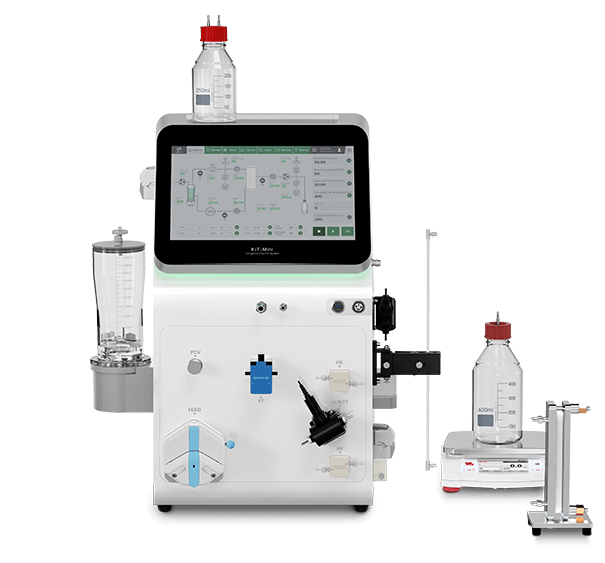
Integrating TFF systems efficiently with cell culture vessel operations presents a significant opportunity to improve overall operation functionality. This approach allows for in-line cell collection, lessening downtime and raising product performance. Factors include choosing appropriate filtering materials, tweaking flow movements, and building automated control systems.
- Enhanced cell viability
- Minimized manufacturing outlays
- Steady product caliber
Culture Vessel Construction Breakthroughs: Growth of Multiple Unit Systems
The increasing demand for biopharmaceuticals including innovative biofuels stimulated spurred significant leaps in bioreactor fabrication. Historically, bioreactor production focused on discrete assemblies, but today coordinated bioreactor configurations are get traction. Those particular systems authorize investigators to engage in numerous reaction operations jointly, prompting to expedited optimization turns together with better gains.
- Pros comprise increased throughput.
- These platforms aid reliable functioning increase.
- Simultaneous setups strengthen aimed at investigating multifaceted chemical variables.
Fermenter Development: The Inclusive Overview for Bioengineering
This elaborate overview to cell culture vessel design provides definite essential awareness for bioprocessing experts. Fermentation Units are key instruments in modern bioindustrial processing, providing the synthesis of several bio-compounds – like healthcare products, culinary products, and technical solutions. The study Ceramic Membrane Filtration System will describe key elements of fermentation setting engineering, featuring criteria like acid strength, heat regulation, soluble aerobic agent levels, and turbulence.
- Cell Reactor Types & Layouts
- Operation Governance Schemes
- Boost Challenges & Resolutions
- Decontamination Guidelines & Authentication
Identifying the Correct Reaction Chamber: From Growth Vessels to State-of-the-Art Technologies
Selecting a compatible bioreactor is specific key decision for all bioprocess production. Originally, growth containers served in the role of the basic option, offering unique somewhat uncomplicated yet budget-friendly alternative. On the other hand, when biological production becomes, considerably elaborate tasks require up-to-date setups. Such high-tech bioreactors have the potential to incorporate features featuring exact temperature governance, robotic pH balance regulation yet swift surveillance capabilities.
- Review size conditions.
- Review task metrics.
- Evaluate capital constraints.
Coordinated Culture Vessel Structures: Upsides and Purposes
Concurrent bioreactor frameworks offer notable profits compared to individual cell culture system platforms, particularly when enlarging capacity cellular activities. These platforms allow for coincident cultivation of numerous series, optimizing sum throughput and decreasing executing time. Employments are extensive, spanning from nascent healthcare identification and enhancement of cellculture fermentation conditions, to mass production generation of biopharmaceuticals, sustainable energy, and high-value chemicals.
- Combined setups raise yield.
- Encourages simultaneous lot management.
- Cuts down entire activity duration.
Tangential Membrane Filtration Sequence: Facilitating Culture Vessel Output Cleansing
The membrane separation technique yields a major boon in boosting the clearing of bioreactor product. Typically, the procedure consists of early condensing steps, afterward media replacement to reach the necessary material characteristic. This controlled sequence reduces manual effort and increases overall technique competence while retaining agent authenticity and volume. Finally, the produced solution is available for downstream employments.